How to Actually Help a Grieving Friend (Beyond 'Let Me Know If You Need Anything')
The phrase we all say is the phrase that helps the least. Here's what actually works, specific, practical ways to show up for someone in the weeks and months after a loss.
The Care Matters Team 6 min read
"Let me know if you need anything."
We all say it. We mean it. And it almost never helps.
Here's why. A grieving person, especially in the first few months, is running on a kind of cognitive low battery. Simple decisions feel impossible. Asking for help feels like one more task in a long list of tasks they don't have the bandwidth for. They don't know what they need. They don't know what you're willing to give. They don't want to impose. And so when you say "let me know if you need anything," you are effectively handing them a form to fill out when they can barely lift a pen.
The fix is not to stop offering help. It's to change the shape of the offer. Stop waiting to be asked. Start showing up with specific, low-friction, pre-decided actions. Here's what that looks like.
Replace open offers with specific ones
The rule is simple: any offer that requires the grieving person to decide, organize, or respond is probably going to get quietly declined. Not because they don't want it, but because they don't have the energy to engage with it.
Compare:
"Let me know if you need anything" → "I'm dropping off dinner on Thursday around 6. No need to be home. I'll leave it on the porch. Any food allergies I should know about?"
"Call me if you want to talk" → "I'm going to call you Sunday at 4. Pick up or don't, no pressure. I just wanted you to know."
"Let me know if I can help with the kids" → "I can pick up the kids from school on Wednesdays for the next month. Yes or no?"
The difference isn't in how much you're offering. The difference is in whether the grieving person has to do any work to receive it. A specific offer says: I've already thought this through. All you have to do is not say no.
The practical category: things that remove decisions
Grief is exhausting in ways non-grieving people underestimate. Every small decision, what to eat, what to wear, whether to answer the phone. Takes disproportionate energy. The most useful thing you can do is remove decisions from their life without removing their autonomy.
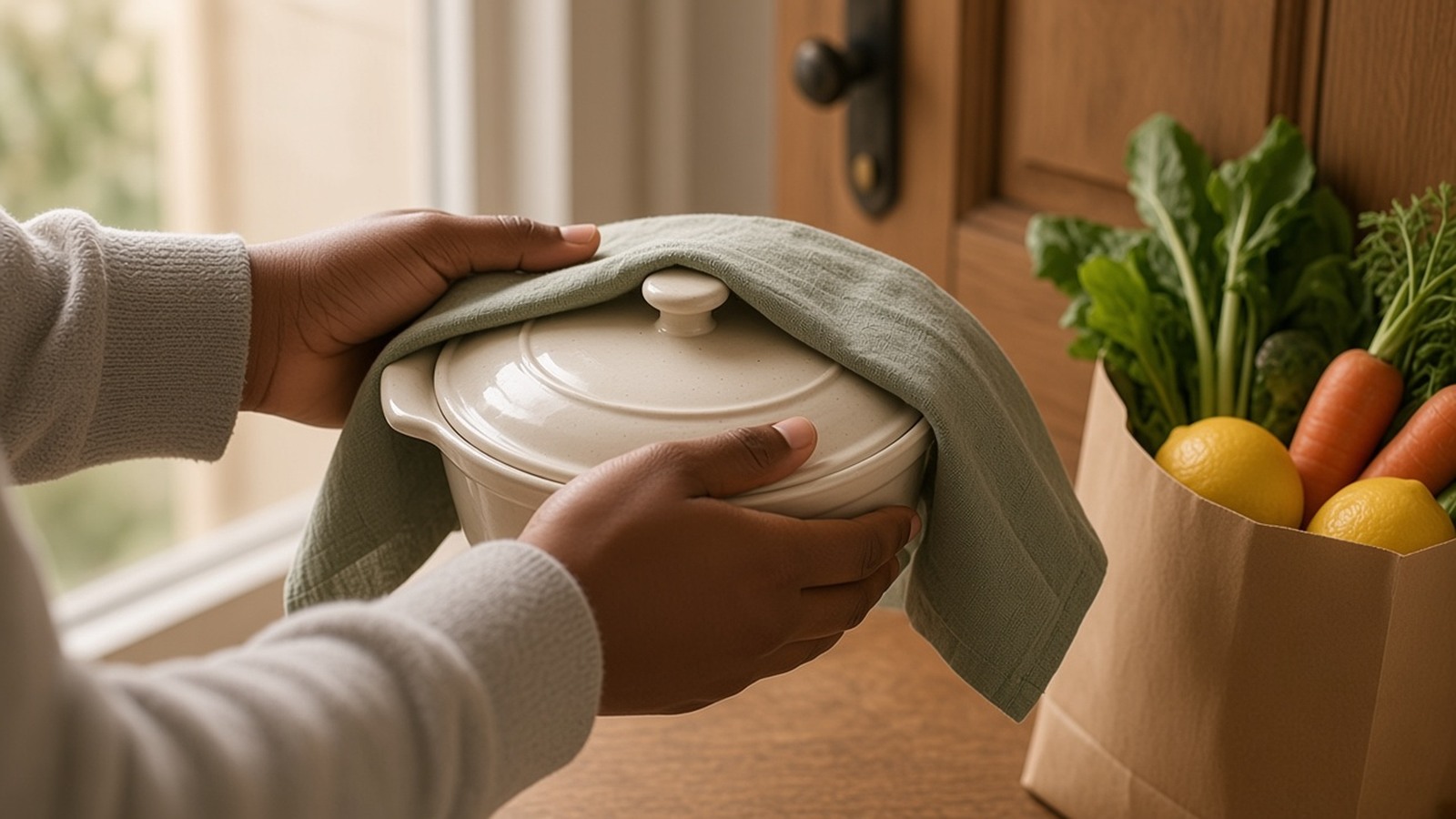
Food they don't have to think about. Frozen meals they can reheat at 8pm when they suddenly realize they haven't eaten. A sympathy gift under $50, such as a grocery card or a box of tea, can do the same job. Gift cards to delivery services that cover several meals. A grocery delivery you order for them once a week for a month. The goal isn't one big drop-off; it's a slow, reliable trickle of food that doesn't require them to plan.
Household tasks they have stopped doing. A cleaning service, a lawn service, someone to pick up dry cleaning, someone to walk the dog, someone to take out the recycling. These sound like small things. They're not. The grieving person's house is often quietly falling apart in the small ways, and they can see it happening, and they don't have it in them to fix it.
Paperwork help, if you know them well enough. The paperwork after a death is its own form of cruelty. Accounts to close. Bills to transfer. Insurance forms. Government agencies. If you are close enough to the person to be trusted with this, offering to sit with them and make phone calls together, not to take over but to be beside them, is an enormous gift.
The emotional category: things that remind them they are not alone
Practical help is essential. But grief is not just a logistics problem. It is a presence problem. The grieving person has lost a person who was part of the daily architecture of their life, and the silence where that person used to be is deafening. Your job, as a friend, is to be in that silence with them sometimes.
Show up without an agenda. The best grief-adjacent visits have no plan. You're not there to cheer them up. You're not there to "get them out of the house." You're there to sit on their couch and drink tea with them and not require anything of them. This is deceptively hard. Most of us want to do something. Just being is the harder, better thing.
Say the name. One of the most common regrets grieving people share is that after a while, their loved one's name stopped being spoken in their presence. Everyone got afraid to bring it up, as if mentioning the person might hurt them. It does the opposite. Saying the name is one of the kindest things you can do. If you freeze on the words, what to say to someone who is grieving is a short list of lines that tend to help. "I was thinking about your dad today. Remember the way he used to whistle when he cooked?" Almost no one does this. Almost everyone wishes someone would.
Remember the hard days. A text on the birthday. A card on the anniversary. A phone call on the first holiday without them. You do not need to be in the inner circle to do this, sometimes the outer-circle "I remembered" messages land the hardest, because they come as pure, unexpected kindness.
The long game: the month three rule
Here is the single most useful thing in this entire article, if you only remember one thing.
Most people show up in week one. Very few people show up in month three. The grieving person knows this. They have already started bracing for it.
The months after a loss do not get easier just because the casseroles stopped. If you want to be the kind of friend a grieving person never forgets, set yourself a reminder. In your phone, in your calendar, wherever you'll see it. For three months after the loss. And then send a text. That's it. One text. "Still thinking of you. No need to reply." That message, arriving when almost no one else is still checking in, is something grieving people talk about years later.
Set another reminder for six months. And nine months. And the one-year anniversary. These take thirty seconds each. They might be the most impactful thirty seconds of the entire friendship.
What to actually do this week
If you're reading this because someone in your life is grieving and you don't know what to do, here is a concrete plan you can execute in the next 24 hours:
- Send a text that requires no reply: "Thinking of you. No need to respond. I'm not going anywhere."
- Schedule three calendar reminders for that person: one for three weeks from now, one for three months from now, one for six months from now. Each reminder says the same thing: send a short, warm, no-pressure message.
- If you live nearby, make one specific offer this week. Not "let me know if you need anything." A specific, pre-decided, easy-to-accept offer. Dinner on a day you pick. A walk you'll go on together. A task you'll take off their hands.
- Say their person's name in a sentence the next time you talk to them. Not in a performative way. Just naturally. Give them permission to still be someone whose name is spoken.
That's it. That's the whole recipe. Nothing about it is clever. Everything about it is rare.
The one thing you can't do
You can't make their grief smaller. Please stop trying. You're not supposed to. Grief isn't a thing that gets solved. It's a thing that gets survived, and the way it gets survived is with company. That's the only thing that helps. Not wisdom, not advice, not hope. Company.
Be the friend who stays in the room. That is the entire job. And it's a bigger job than most of us ever really do.
You cannot do their grieving for them. If they want somewhere else to turn on the hard days, Care Matters is one option for ongoing support.